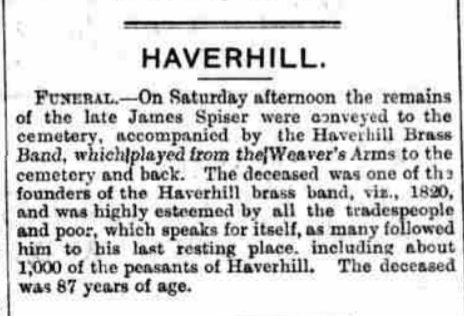
Records show that the Haverhill Brass Band was formed in 1820, making it one of the oldest brass bands in the country. However, for over half a century, two brass bands co-existed in the town; the Haverhill Brass Band (formed in 1820) and the Haverhill Shepherds Brass Band (formed in 1872). Both bands performed in the community until the outbreak of World War I, where the two groups disbanded during this period of conflict.
However, in 1920, the two bands amalgamated to form the Haverhill Co-operative Band. In 1955, after over 30 years of support from the Co-operative Society, the band once again found itself with a new identity; this time under its present title – ‘Haverhill Silver Band’
Haverhill Silver Band continues to entertain audiences both locally and further afield. If you would like to hear the band live, please look at our events page to learn where we will soon be performing.
If you would like to explore our history in more detail, please read on about the four separate phases of the bands’ history:
Haverhill Brass Band
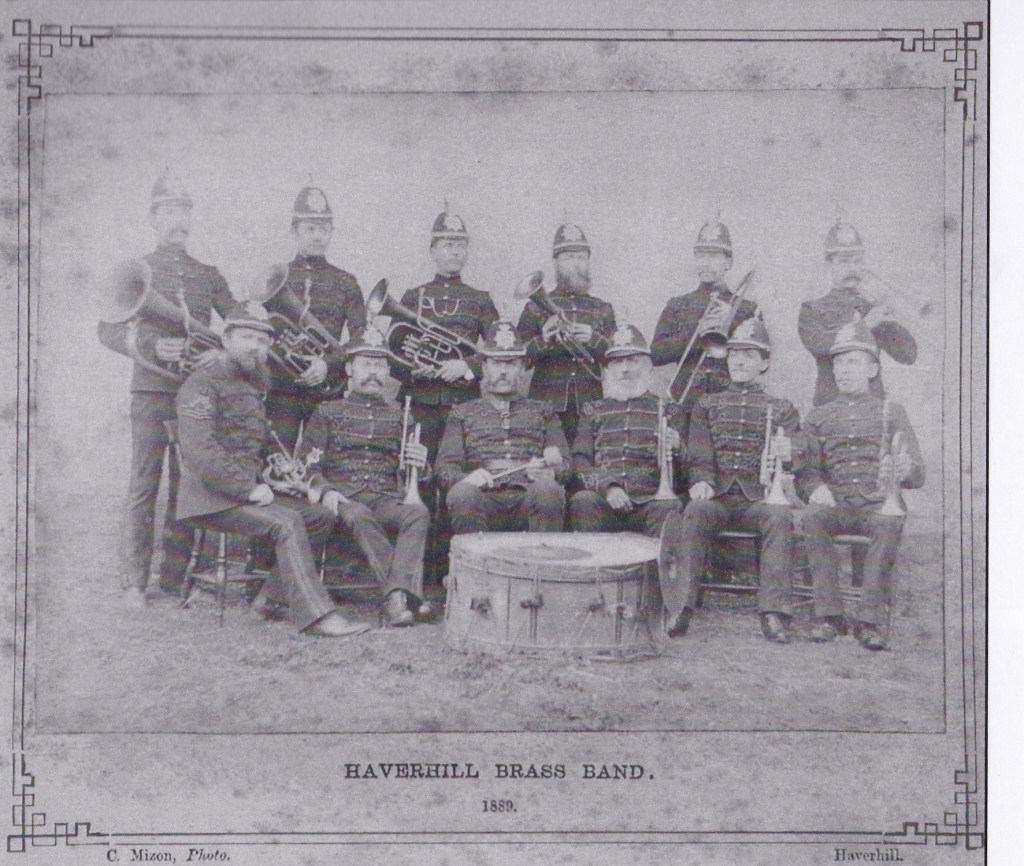
According to local records, the Haverhill Brass Band (aka Haverhill Old Band, Haverhill Oddfellows Band) was formed in 1820 and had close ties to the Oddfellows Society for its entire existence. Local newspaper articles from the mid-19th to early 20th century show that the band was highly active within West Suffolk and West Essex; performing at various parades, fetes and country shows under the leadership of its long-serving bandmaster Charles Mizon; a prominent Haverhill silk weaver and lodge secretary.
Haverhill Brass Band had a busy performance diary and travelled extensively across East Anglia which reached as far as Downham Market and Thetford.
The group enjoyed a good relation with the town’s second brass band; the Haverhill Shepherds (read more about them here). Haverhill Brass Band and the Shepherds frequently performed alongside each-other, particularly at the Haverhill Gala, as well as various processions – the Friendly Society Parade being a notable one.
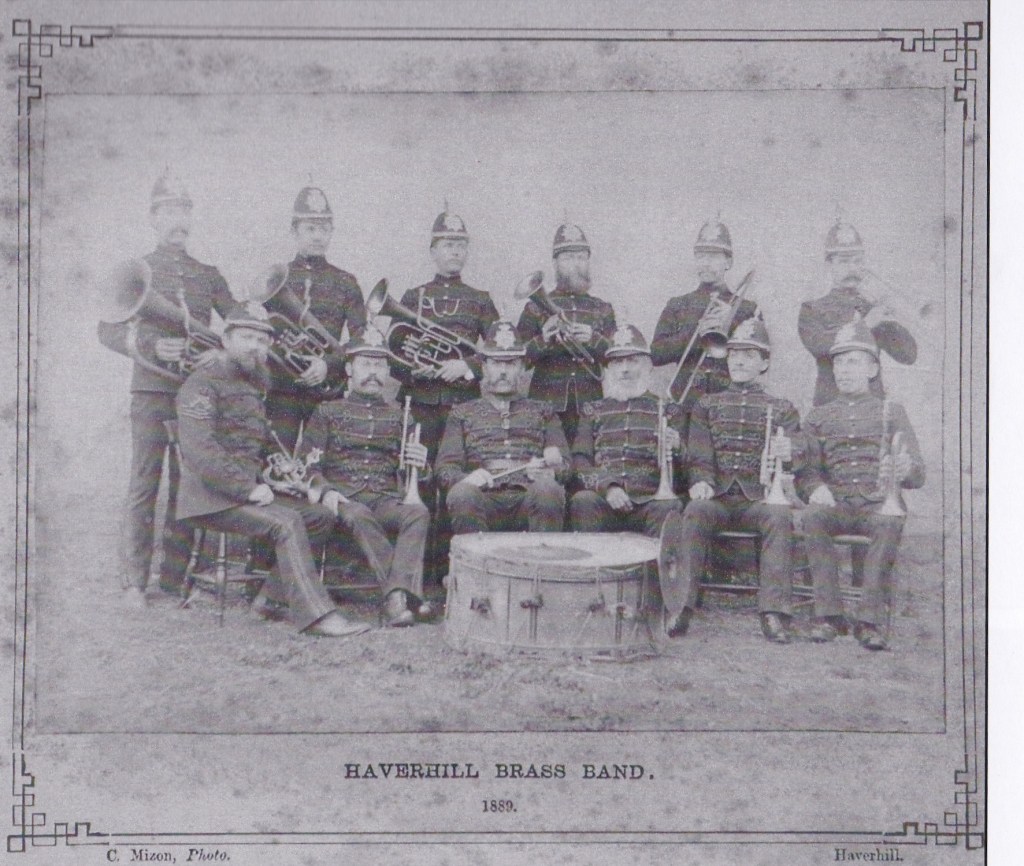


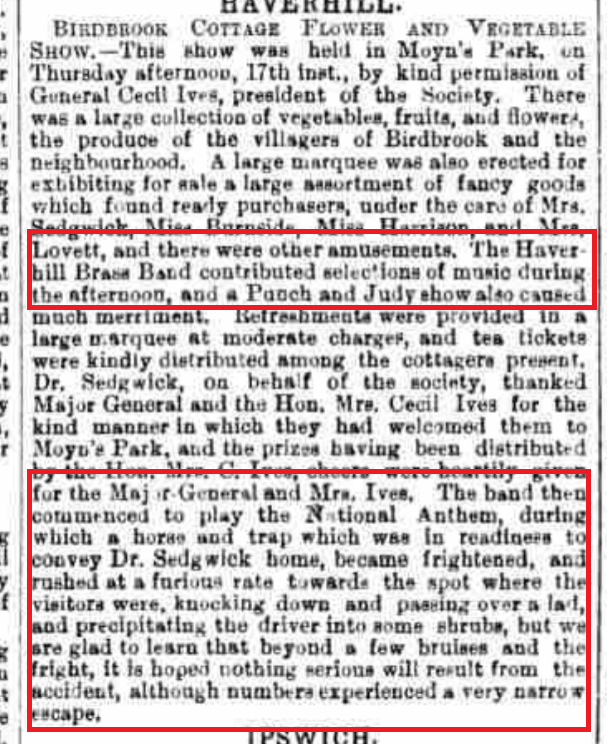
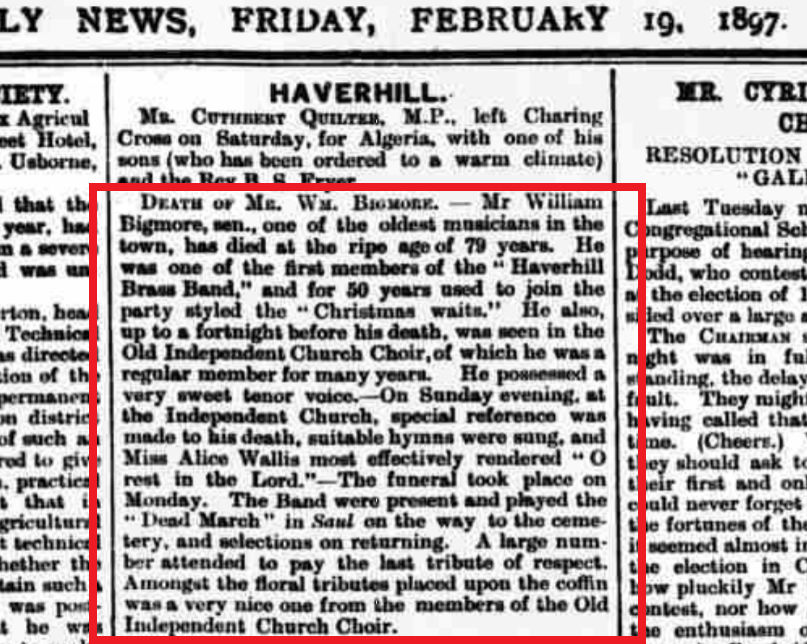

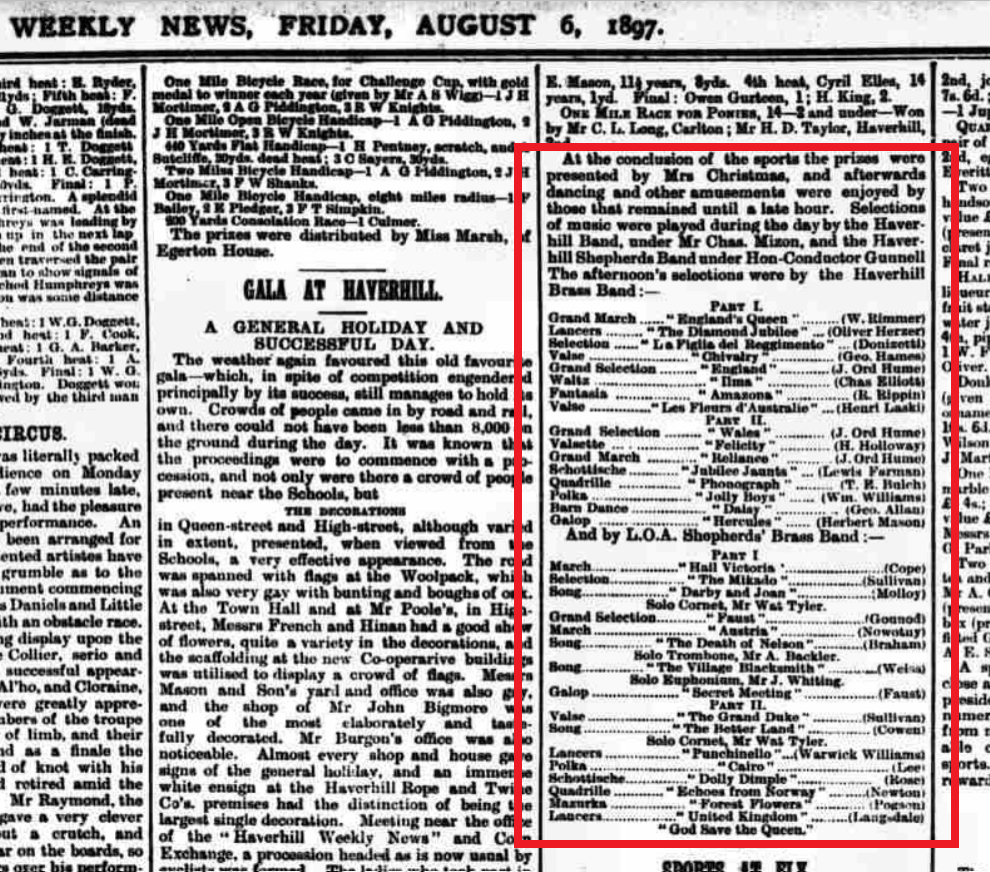
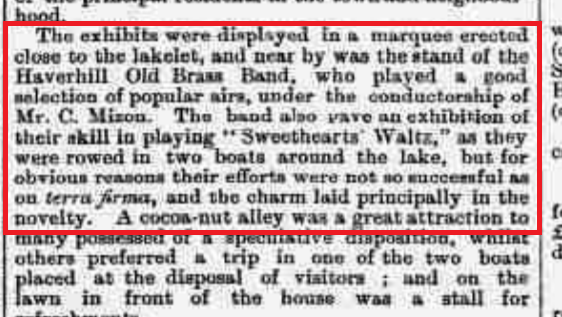
The band had their fair share of memorable experiences, including a Diamond Jubilee Celebration at Baythorne Hall in 1897, to a rather unfortunate incident in 1885 when performing at Birdbrook Flower Show; upon playing the national anthem, the music startled a horse and trap which then reportedly bolted into a packed crowd.
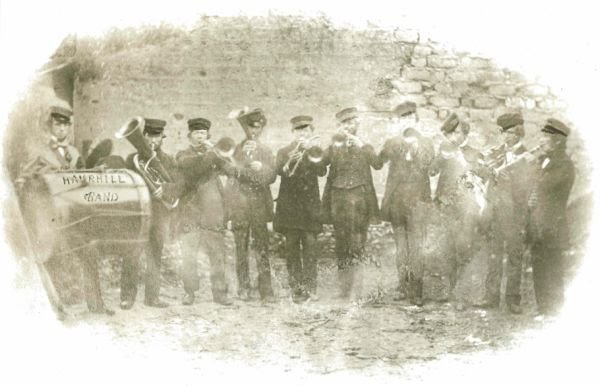
Haverhill Brass Band, circa 1857.
The band continued to perform into the 1910s and was last mentioned in a local newspaper in August 1913, performing at the Haverhill Gala and Flower Show alongside the Shepherds.
The band was very much a family affair and at one time consisted of seven members of the Bigmore family and three members of the Poole family.
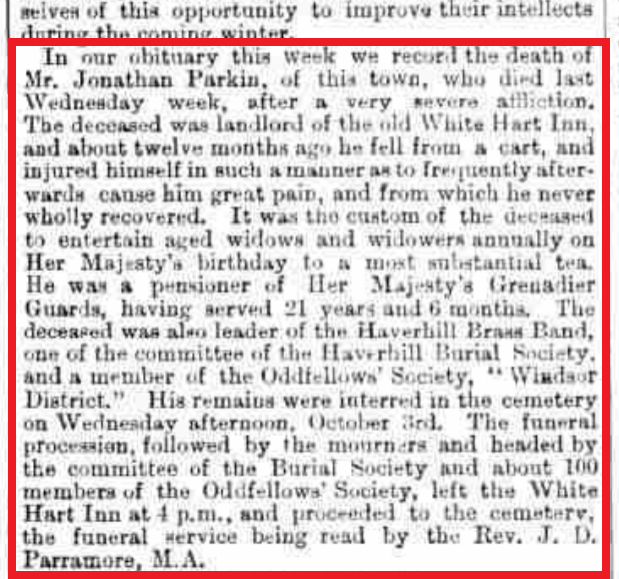
At present, we know that the band was led by at least three bandmasters: these being Jonathan Parkin, Mr J. Bigmore, Charles Mizon and Charles Elliott.
Haverhill Shepherds Band
The Shepherds Band (aka Loyal Order Ancient Shepherds Band) was formed in 1872 and just like the Haverhill Brass Band, had a busy performance diary throughout the mid-19th and early 20th century. The band regularly gave concerts and performed at various agricultural and horticultural shows, as well as taking part in parades and processions.
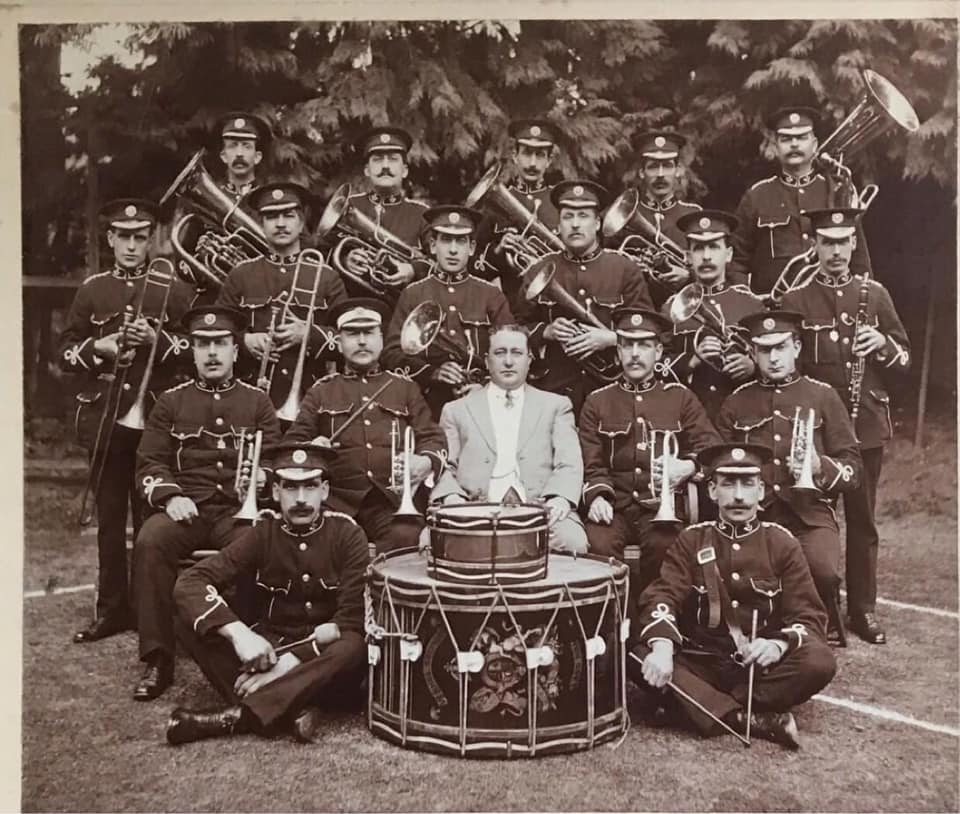
Haverhill Shepherds Band, 1910.
The group disbanded just after the outbreak of World War I and was last recorded performing publicly in late 1914. On the 5th August that year, the band headed a parade of Territorials from the local drill hall to the railway station, where the group of young lads would depart for Felixstowe. The Shepherds were also instrumental in raising money for the National Fund – the proceeds going towards the war effort.
At present, we can identify three bandmasters that led the Shepherds: these being Charles Milligan, Edgar Gunnell and William ‘Wat’ Tyler.
When anyone mentions brass music in Haverhill times past, the name Wat Tyler usually comes up. For more than sixty years, he occupied a very high position. The first instrument that Wat played was the piccolo, but on joining the town band he switched to cornet. When the town band disbanded, he joined the Shepherds Band and when that also folded, he helped form the Co-operative Band.
Wat was clearly a talented cornet player, for on 3rd November 1888, the Bury Free Press printed an article about a concert in aid of the Shepherds Brass Band that took place at the Town Hall on 25th October. Wat played a cornet solo.
When taking over the baton of the Co-operative Band, he proved his worth as bandmaster. The National Brass Band Association presented Wat with a framed certificate in recognition of over fifty years playing. He had played at virtually every local event and is said to have recalled at his Diamond wedding celebration in 1951 the he could remember playing at celebrations for Queen Victoria’s Jubilee. Wat died in 1953 aged 83 years. The Co-operative Band marched in silence in front of the funeral procession and played at the graveside, sounding the last post as he was laid to rest.
Haverhill Co-operative Band
Haverhill Silver Band as we know it today was formed in 1920 as the Haverhill Co-operative Band, following the amalgamation of the Haverhill Brass Band and the Haverhill Shepherds Band. Thanks to the efforts of several individuals (including the former bandmaster of the Shepherds, Wat Tyler), the band were fortunate to gain support from the local Co-operative Society; and just like its two predecessors, soon became very active in the town and surrounding areas.
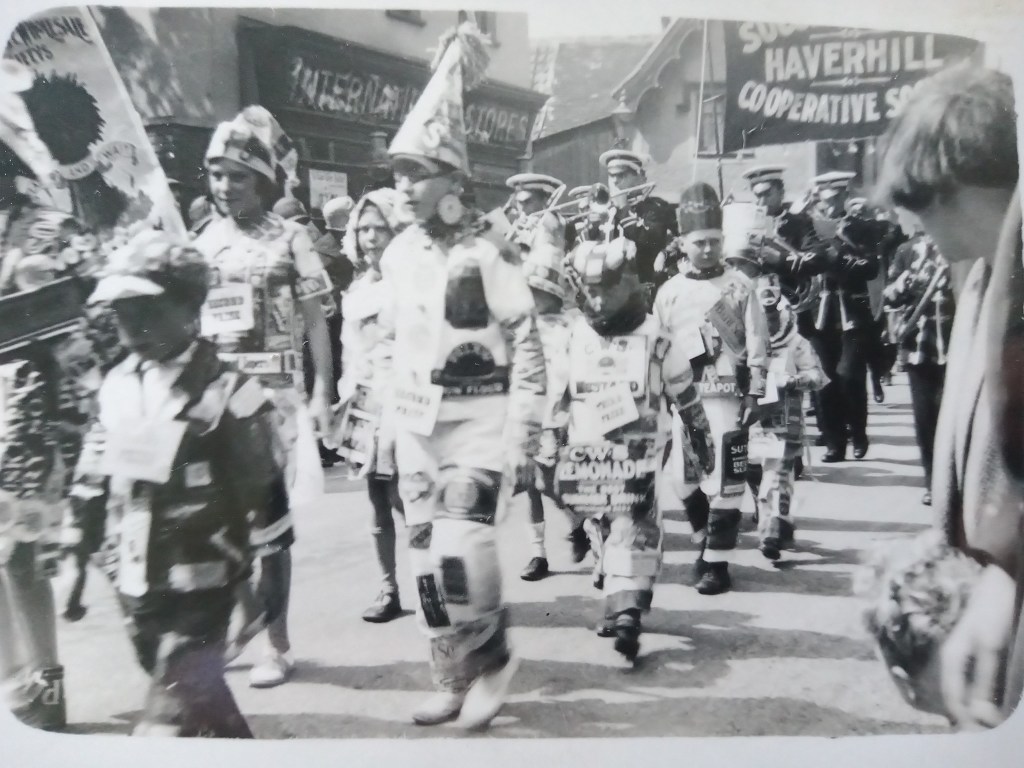
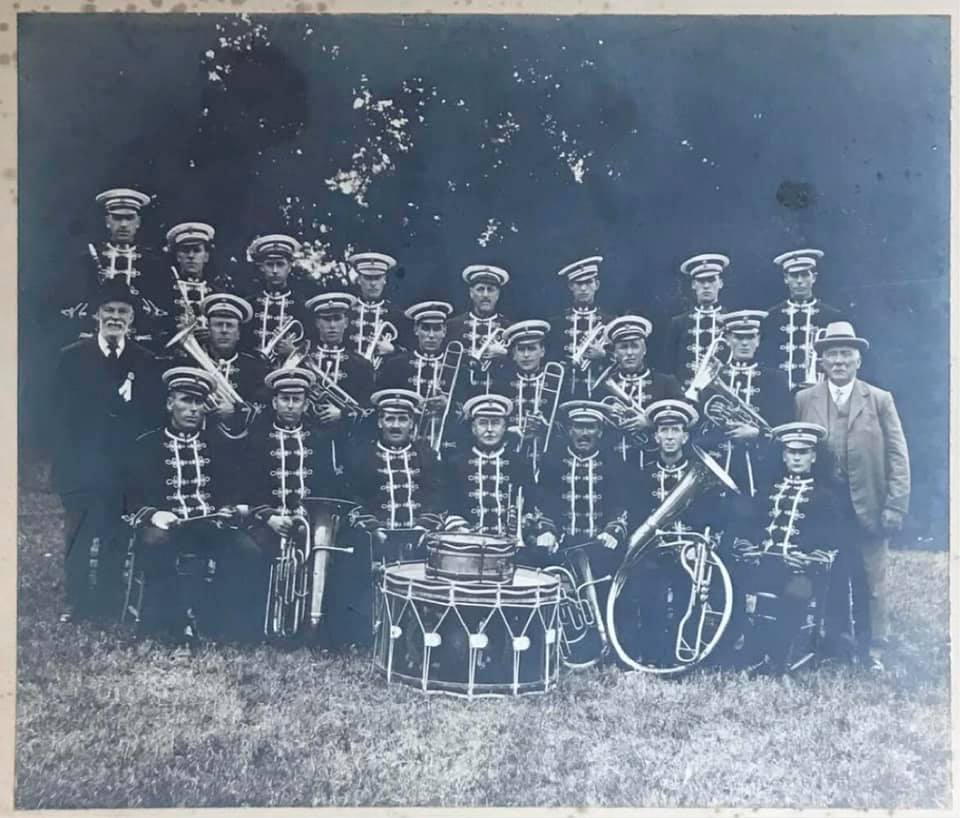
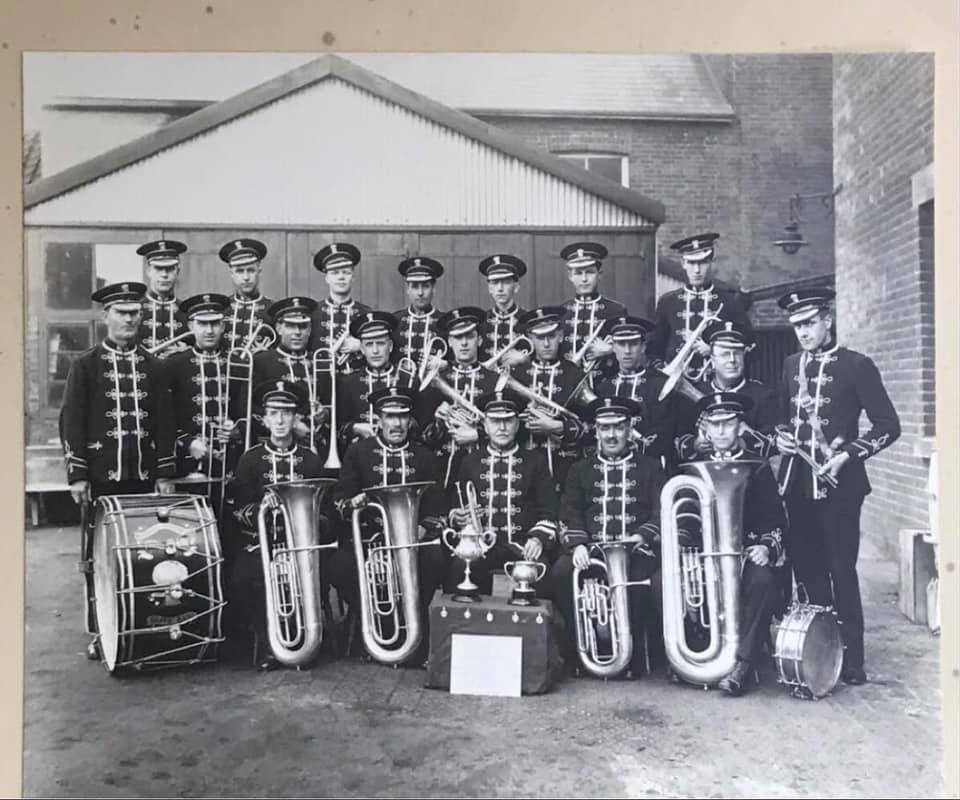
The band’s first recorded contest entry was in 1932, competing in Section 2 of the East Anglian Band Contest under the directorship of Robert Austin. The Co-op Band were placed 2nd out of six competing bands who had entered the contest, with Percy Page winning a medal for ‘Best Solo Horn’. The following year, the band returned to the contest and placed 1st out of five bands. More success followed and the band gained a 3rd place at the Fakenham Contest in 1935 and were once again victorious at the East Anglian in 1936.
Contest success saw the band perform under several identities during the 1930s and 1940s; these included ‘Haverhill Co-operative Silver Band’, ‘Haverhill Silver Prize Band’ and Haverhill Co-op Silver Prize Band’. During this time, the band rehearsed in Bell Yard, close to the Co-op Society Buildings in the High Street.
The band also travelled to Great Yarmouth to take part in the East Anglian Brass Band Rally, performing alongside no less than 20 other bands from Norfolk, Suffolk, Essex and Cambridgeshire. This popular event took place on an annual basis from the 1930s until the early 1970s.
In 1951, the band took part in the 1st Suffolk Championship Contest, held in Sudbury. Unfortunately due to an administrative error, the band were wrongly awarded 1st prize. The revised result meant that HCB had to be content with 3rd place instead; the title given to local rivals Long Melford.
Haverhill Silver Band
Moving onto 1955, the band lost the support of the Co-op and renamed itself ‘Haverhill Silver Band’. 1961 saw the band enter the London & Southern Counties Regional Contest for the very first time under the baton of Geoff Pratt. Despite little success at the L&SC contest in 1961 and 1962, Haverhill Band continued to enter the East Anglian Contest and Suffolk Championships throughout the 1960s.
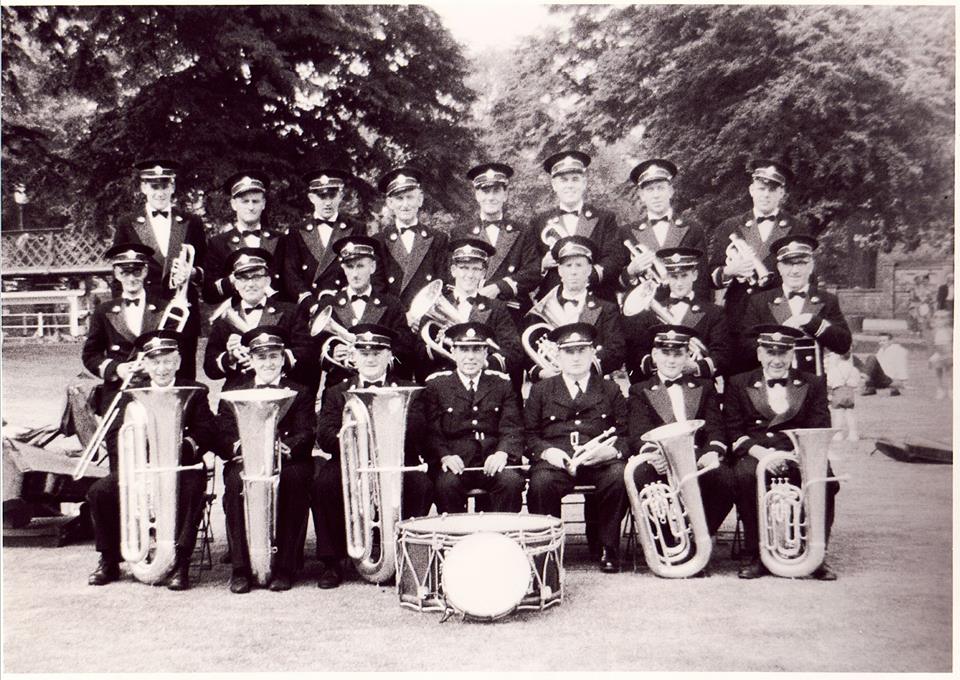
Away from the contest stage the band was very much a part of the local community, often performing in the bandstand on the Haverhill Recreation Ground. Les Ager was principal cornet for five years after returning from National Service and was Musical Director from 1964-1971. Charlie Hulyer then over as MD until Les returned in the mid-1970s.
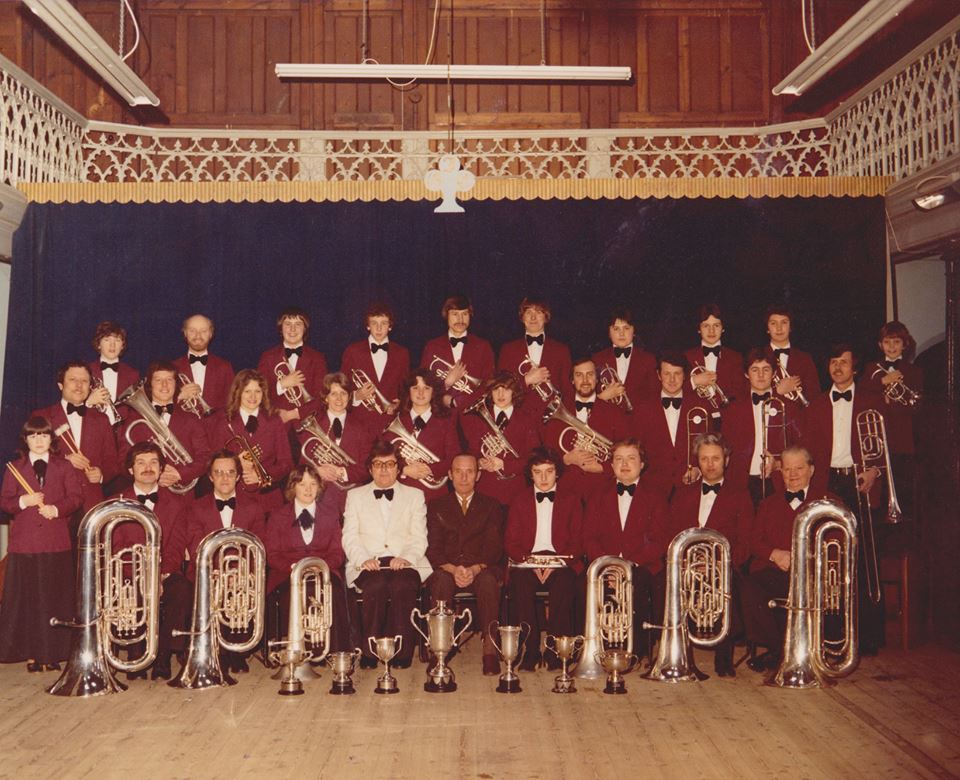
From 1975, the band enjoyed a resurgence, as Les steered them to unprecedented contest success; enjoying prize winning performances at the East Anglian Contest, Pontins Championships (including a memorable win playing ‘The Winter’s Tale’ in 1979) and qualifying for the Fourth Section National Finals in 1981. HSB qualified for the Third Section Finals in 1983 which gave them the opportunity to perform at the Royal Albert Hall. By 1984 the band were now competing in the Second Section, one division away from the Championship Section (in those days there was no First Section).
Les introduced ‘Carols for All’, now a popular annual event at the town’s Old Independent Church and he also instigated the band’s first recording in 1982.
The band was now a force to be reckoned with in East Anglia with the band winning the Suffolk Championships six consecutive times between 1982 and 1987.
The band now also boasted a highly successful youth band which was formed in the early 1980s. Under the baton of Mark Ager, Haverhill Youth Band was also a strong force in the contesting world. In 1985, the youth band entered the Suffolk Championships and came second, only beaten by the senior band!
1990 saw the band drop back to the Third Section, however quickly bounced back – winning the South Midlands Area Contest in 1993, followed by a 3rd place at the National Finals, held in September that year. Les’ son Mark Ager briefly took over the baton in 1994 before the arrival of Charles Shipp in 1995. Charles played euphonium in the Haverhill Salvation Army Band, Haverhill Silver and then Cambridge Co-op Band. He took the helm having conducted City of Cambridge Band and steered Haverhill to top section status by 2001, having come second in the L&SC Second Section in 1996 and winning the L&SC First Section in 1999. The first CD made by the band was ‘Song and Dance’, recorded in 1999.
Mark Ager took over directorship from Charles in 2002 and consolidated the band’s position in the First Section. 2003 saw the band gain 2nd place at the SCABA Autumn Contest, whilst 2005 saw the band gain another 2nd place at the Butlins Mineworkers Contest. 2006 was a particularly memorable year for HSB after winning the Butlins Contest and the L&SC First Section. The band yo-yoed between the First and Championship Section between 2007 and 2011, before gaining promotion after once again winning the L&SC Contest in 2011. Unfortunately the band were relegated back to the First Section in 2013, but quickly reversed their fortunes by winning the First Section in 2015.
In 2017, the band had its most successful contesting year, finishing 4th in the Championship Section at the L&SC Contest, followed by a 6th place at the All England International Masters; performing the fiendishly difficult ‘The Torchbearer’. In October that year, MD Mark Ager unfortunately decided to leave the band.

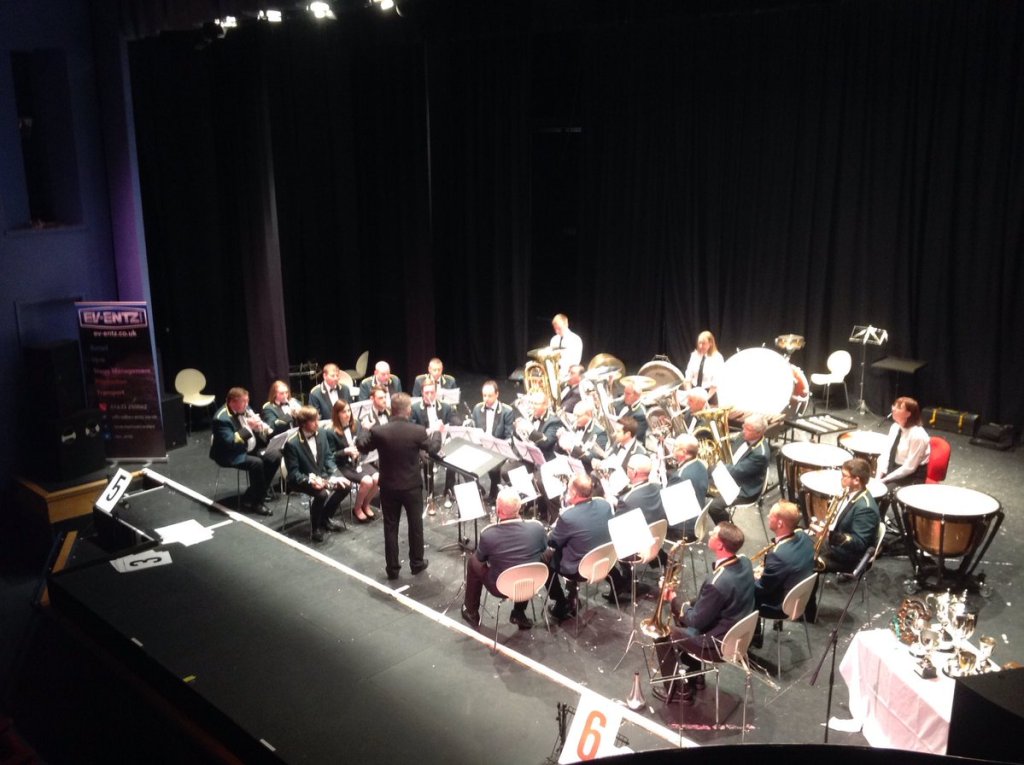
After appointing Paul Filby as its new MD, 2018 saw the band consolidate its position as East Anglia’s finest band at the L&SC Contest and gained 3rd prize at the LBBA Open Contest.
The band was awarded 3rd prize in the test-piece contest at the 2019 Butlins Contest for a stunning performance of ‘Carnival Overture’, beating several leading Championship Section bands. The was followed by another 4th place at the L&SC Contest. We have been fortunate to have performed across the UK, competing against many fine Championship Section bands. In the last three years, we have travelled to Warrington, Loughborough, Porthcawl and Bolsover, to name but a few places.
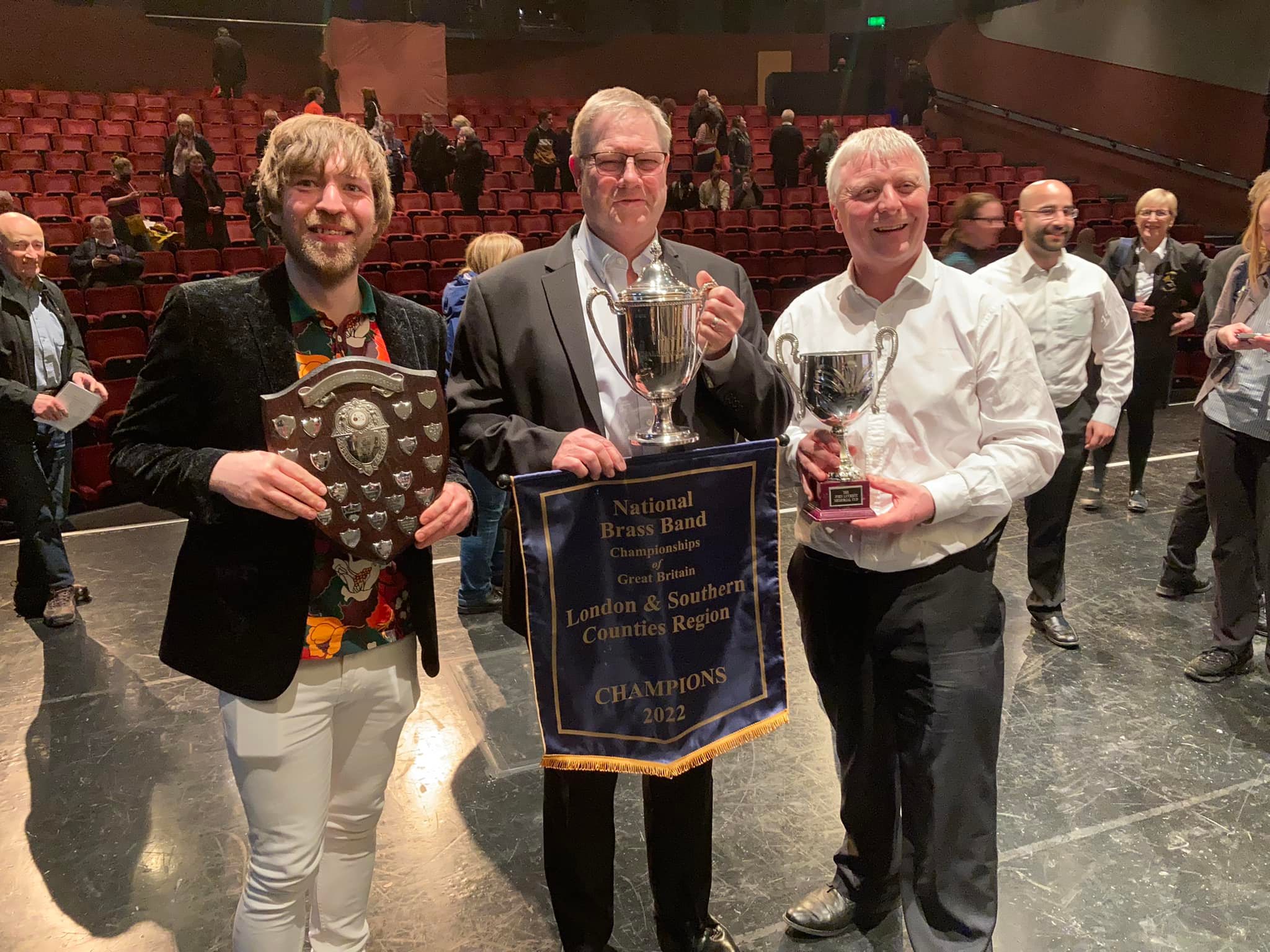
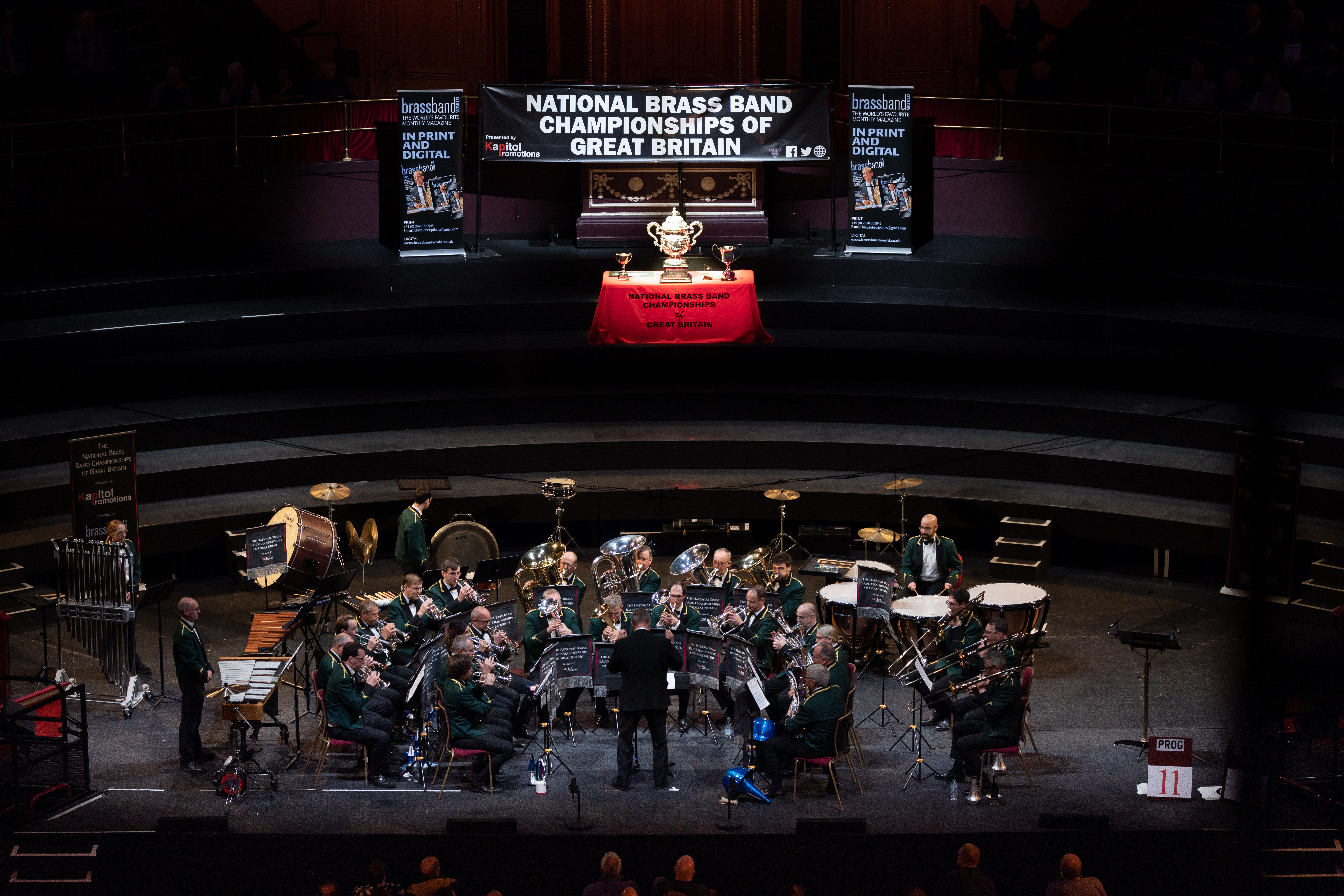
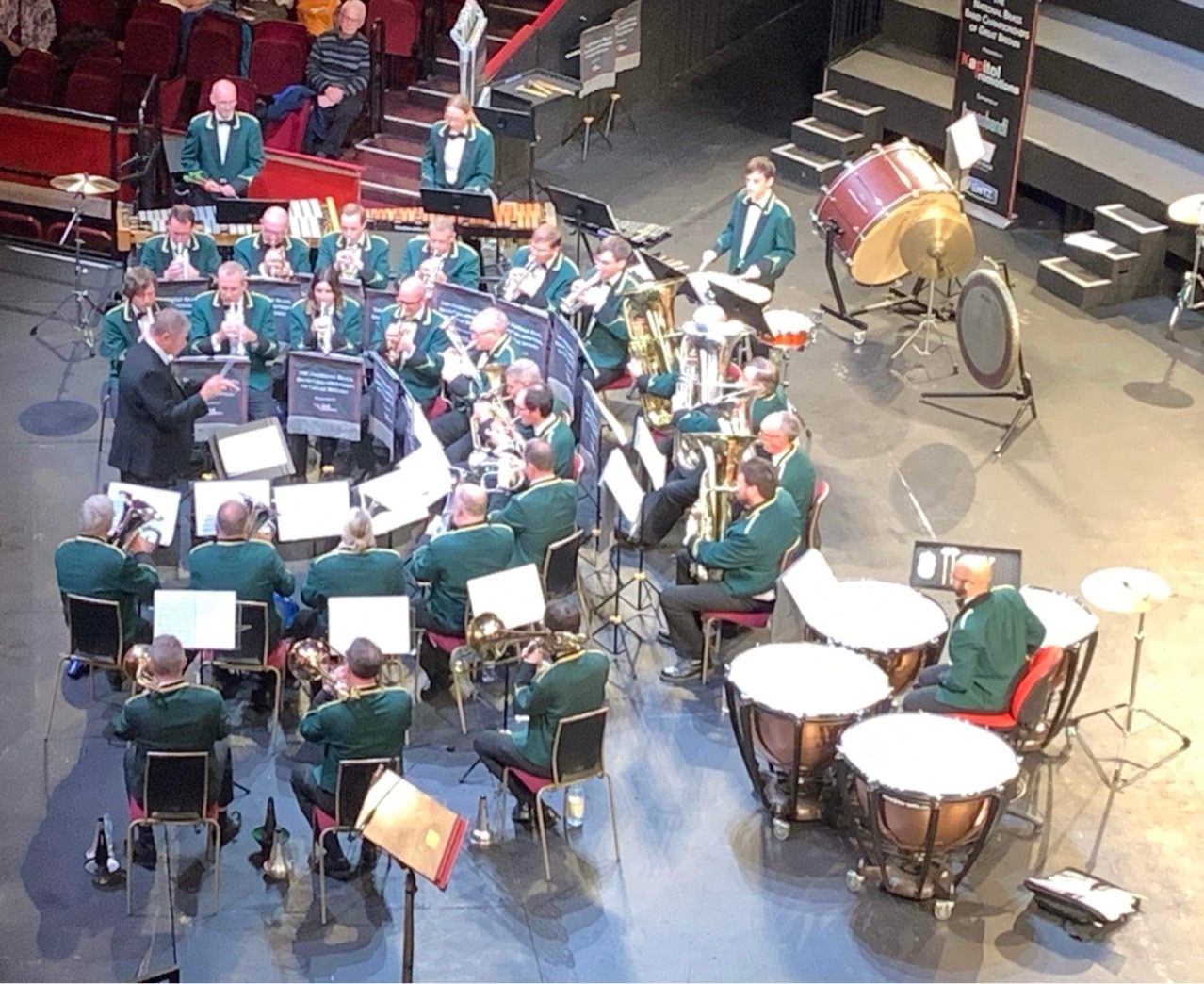
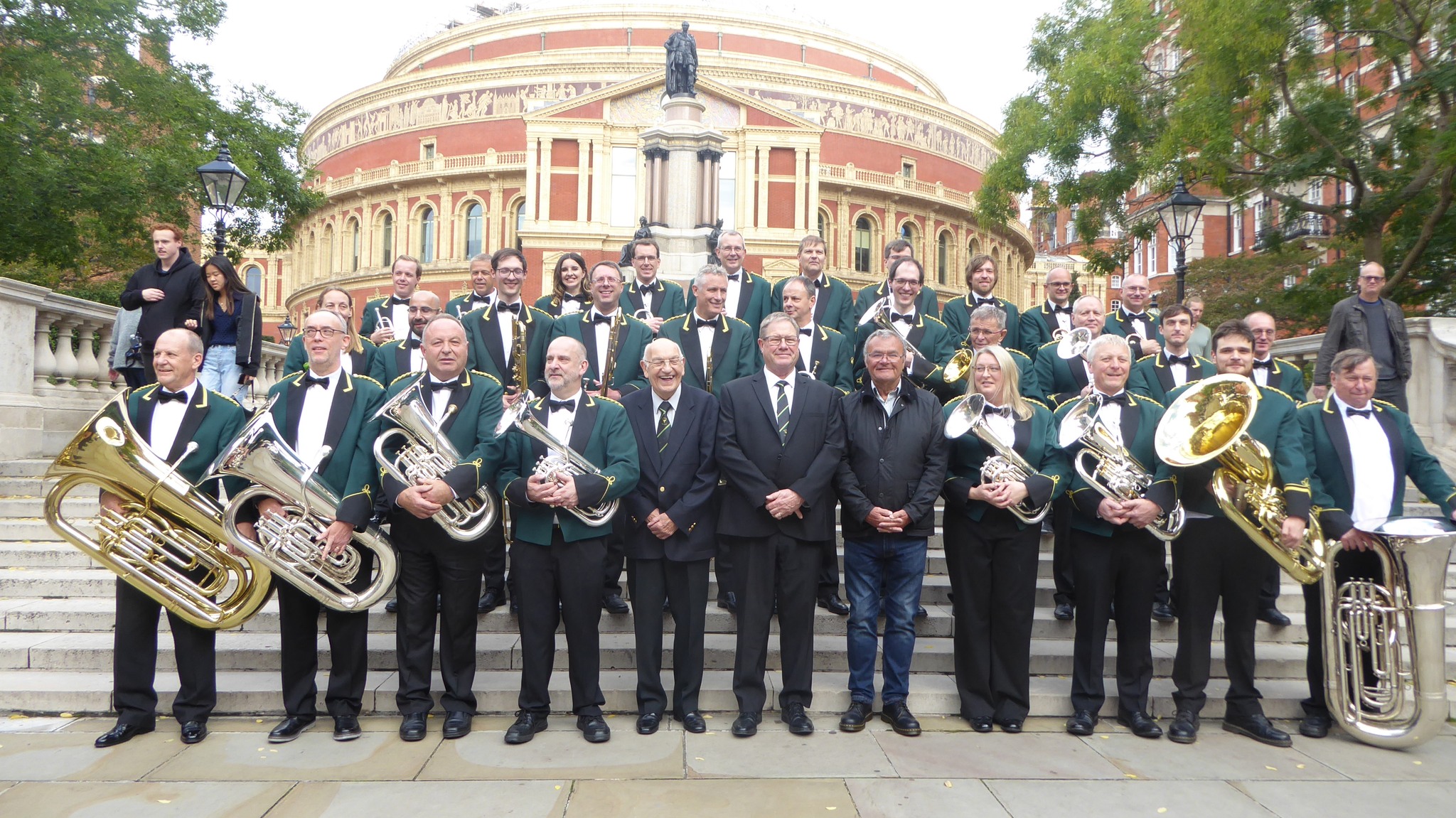
Haverhill Silver Band then made history in 2022 becoming the London & Southern Counties Champions and becoming the first band from Suffolk to ever gain qualification to the national finals at the Royal Albert Hall

It’s now been over 200 years since the formation of the original Haverhill Brass Band and HSB continues to delight audiences throughout East Anglia and beyond. Although the world is now a very different place since the era of Charles Mizon and Wat Tyler’s bands, we are proud to continue the historic tradition of brass band music in Haverhill.
 Haverhill Silver Band